The 8th May 2025 marks the 80th anniversary of Victory in Europe Day (VE Day). The day signifies an opportunity for communities across the UK and Commonwealth to celebrate and honour the Second World War generation and those who lost their lives in the War.
Nationwide initiatives include the lighting of beacons across the country and a specially written tune for the pipes, performed on the top of the UK’s four highest peaks. Museums across the Highlands are also playing their role in the programme of events and activities to mark the day.
The Highlands played a vital role in the World Two war effort. Many Highland men fought in the war, but the region also served as a key training ground and housed military bases and airfields. The region’s rugged terrain made it ideal for specialised training and its coastline was crucial for naval and air operations.
Between 1941 and 1945 Loch Ewe was the main strategic military base for naval convoys. As a deep sea loch with direct access to the north Atlantic Ocean, Loch Ewe at times saw up to ninety-five Merchant Navy and Royal Navy ships anchored in the loch. The Arctic Convoy Museum are offering free entry on 8th May as a gesture of commemoration. This is a great opportunity to see their new displays at the museum in Aultbea. They also have a special exhibition of watercolours in the Inverasdale School Tearoom. They were painted from memory by Arctic Convoy veteran Jack Shirley based on sketches he made during his war service. The paintings capture everyday life of sailors who made the perilous journey from Loch Ewe to the Arctic. Each painting is a snapshot of a journey from which many did not return.
On the north coast, Strathnaver Museum will have a special pop up exhibition as part of Bettyhill Village Hall’s VE Day celebrations on 3rd May. You can explore objects from the store, hear the stories of those who did not come home and a screening of Strathnaver Museum’s Their Past, Your Future film featuring interviews with WWII veterans and civilians. This is a free event between 11am to 3pm with refreshments and table top games provided.
Photo of Aunty Baba by Katie Gray
The Highlanders Museum at Fort George near Inverness has a special exhibition launching on VE Day that explores how the War ended in different countries throughout Europe. Discover the special relationship between soldiers of the Seaforth Highlanders and Queen’s Own Cameron Highlanders and the Dutch people they liberated. Learn how a Seaforth Highlander took the surrender of German troops in Norway; alongside the Norwegian resistance fighters he had served with during the war.
A special free event at Dingwall Museum on 8th May between 12pm and 4pm will see volunteer George MacIvor talking about life during the war through some of the museum’s artefacts.
During World War II, the west coast of Scotland served as a key training ground for the British Commandos and other Allied forces. The Commando Basic Training Centre at Achnacarry Castle near Spean Bridge, was a renowned facility for rigorous training, including amphibious assaults and mountain warfare. Other locations like Arisaig House also played a role in Commando training, particularly for the Special Operations Executive (SOE). At West Highland Museum you can explore this story in their Commando Exhibition where you can unpack some of this hidden history with hands-on object discovery.
Wherever you are in the Highlands, take a moment on 8th May to share in remembering VE Day and explore some of the special Second World War stories the Highlands has to share.
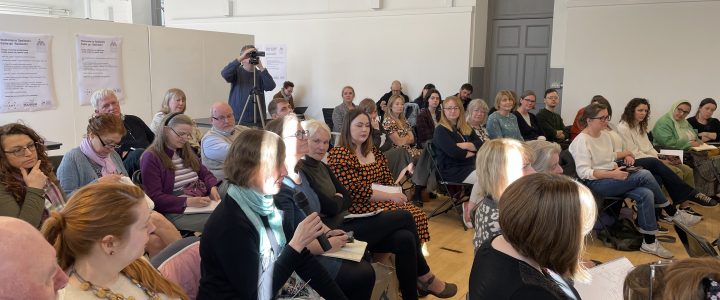
A 1.5 day workforce summit for staff and volunteers working in rural museums and heritage, exploring the challenges and opportunities facing the sector today. There will be sessions on fundraising, inclusion, digital volunteering, wellbeing, working with young people and more.
Are you interested in people, in Highland heritage and in the future of rural museums? Then you could be just the person we need to lead our Future-proofing the Highland Museum Workforce project!
Thanks to funding from Museums Galleries Scotland and The Space, we are looking to deliver a project that focuses on the workforce across the Highland museum sector, addressing the clear challenges around volunteering and wellbeing identified in our Winter 2023 Sector Survey. We propose to create ‘test-beds’ in three museums across the region to develop best practice in priority areas that we believe could turn around these challenges:
Working with and attracting younger volunteers
Working with remote volunteers
Embedding wellbeing practices
Each museum will become a centre of excellence in its chosen area and will share their work through the creation of best practice toolkits focused within the context of small-medium sized rural museums. The Museum Workforce Project Coordinator will provide capacity to support all three museums in creating project plans, developing resources needed and evaluating successes and challenges that will inform the best practice toolkit. Read more about the project in the attached jobpack and please reach out with any questions you may have in regards to applying.
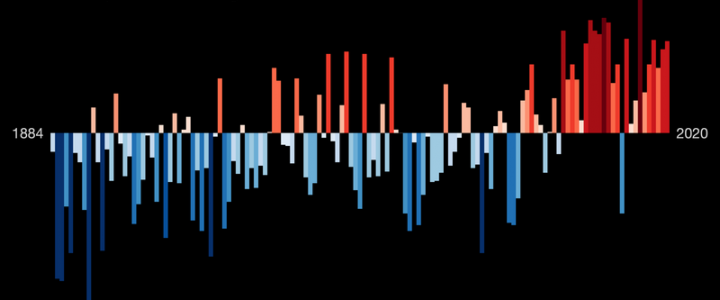
This toolkit represents a comprehensive response to the pressing challenge of climate change, which not only poses a threat to the environment but also amplifies existing social injustices and inequalities. Its primary objective is to equip independent museums in the Highlands with the necessary resources and methodologies to effectively incorporate climate action into their operational framework while fostering meaningful engagement with their communities.
We acknowledge the challenges faced by many small museums that may already be operating beyond their capacity. Embarking on the sustainability journey can indeed seem daunting and overwhelming, particularly when viewed as a massive undertaking. However, the toolkit aims to alleviate this concern by emphasising that sustainability can be seamlessly integrated into existing plans and projects, thereby becoming an intrinsic part of ongoing museum activities.
By presenting a step-by-step guide, complete with lists, glossaries, and do-it-yourself policy kits, the toolkit seeks to demystify the process of becoming more sustainable. Rather than viewing sustainability as a separate and burdensome task, museums are encouraged to see it as a pathway to enhancing resilience and attractiveness to funders. By strengthening sustainability practices, museums not only contribute to climate action but also position themselves as more appealing destinations for visitors and potential revenue sources.
Ultimately, the toolkit strives to streamline the sustainability journey for museums, allowing them to devote less time to administrative tasks such as policy development and more time to engaging in meaningful sustainability projects and events. By providing practical resources and guidance, the toolkit aims to empower museums to navigate the sustainability landscape with confidence and enthusiasm, driving positive change within their communities and beyond.
Why should museums & heritage organisations take action?
It makes financial sense: save money. Action now, saves costs later. It is cheaper to address climate and adaptation measures now rather than leaving it. Make links to Sustainable Development Goals to strengthen funding applications.
Climate and social justice – ensuring a just transition.
Educational enrichment – assisting with behaviour change.
Enhance reputation.
Attract and retain staff.
Press opportunities – opportunities for museums to spread the word about the great work they do to be more environmentally and climate friendly.
You can tackle multiple issues and there are opportunities for co-benefits. E.g. nature and biodiversity, employment, reduce pollution, community wealth building
Current and future regulatory requirements: to secure funding in the future.
Meeting current legislation ≠ safety: Climate change is happening fast but regulations and guidance are slow to change, currently lagging 12-20 years behind the science.
Important to act now to avoid cascading risks: Full impact of climate change is difficult to quantify. E.g. Extreme weather disruption, fluctuating prices of materials.
Crossovers with health and safety. E.g. Storms and flooding, pests and diseases, rising temperatures.
Mitigation isn’t enough and we need to reduce negative environmental and climate impact.
Download the resources you need below and/or get in touch if you would like any help with getting started. This toolkit was developed in partnership with Ki Futures with thanks to funding from Museums Galleries Scotland.
With the current provision of Gaelic Development Officers (GDOs) across the region under threat, we have invited Anna MacQuarrie (Gaelic Museum Development Officer, working for Applecross Historical Society, Gairloch Museum, Highland Museum of Childhood and West Highland Museum) to highlight the important work our GDOs do and how the loss of this role will impact Gaelic development across the Highland region, most especially in our museums.
Museums demonstrate brilliantly the transformational impact that one well-placed funded role can make to a community. Across Scotland there have been around 30 such posts employed as Gaelic Development Officers (GDOs) since 2021, working to increase the number of people speaking, using and engaging with Gaelic. I am one of these GDOs. So it was devasting to learn this February that the scheme will end with no future funding put towards it. It had been funded partly by core Bòrd na Gàidhlig budget, with c£350,000 additional top-up funds from the Scottish Government. A trifling amount of money in the context of Government budgets, but hugely significant in a community context.
Working across sectors covering heritage, community development, the arts, youth engagement and the environment, these roles have seen transformational change in their organisations and communities, a majority of which are in the Highlands and Islands. There has been a distinct sense of hope and optimism associated with these roles, with meaningful and appropriately paid work opportunities for professionals often in rural areas. That the roles have been Gaelic-specific has been a necessary and very welcome step – putting the language and culture at the heart of all the activity happening, whether that is organising local music sessions, biodversity workshops, art exhibitions, or football camps for hundreds of young people across the country. Sometimes this work has been in areas where Gaelic remains a community language, in other areas it hasallowed people to re-engage, or engage for the first time, with it. It has been an unmitigated success, with Gaelic strengthened in response to community needs. One such example is with my own colleagues at West Highland Museum where, with Comunn na Gàidhlig, a national youth development group, we have delivered badly-needed extra-curricular sessions for Gaelic-speaking young people. This has contributed to them developing a sense of pride and ownership in and of their culture and the museum collections, and has given them vital social opportunities outwith a school setting.
My role has been a particularly rare beast among the wider GDO network, with museums outside the Hebrides generally slow to put Gaelic-specific work at the core of their developmental aims. These cuts will affect not just my work, but also GDOs in vital Highland cultural organisations like Fèisean nan Gàidheal, Fèis Rois, Eden Court, the Shieling Project, An Comunn Gàidhealach and SEALL. There are many more working in other areas which also impact the Highlands – the strength of the Gaelic community is the well-connected ecosystem in which we live and operate. But all of this is is now at risk.
As Gaels we have a distinctive worldview and, traditionally, customs and perspectives very different to that of the English-speaking world. The landscapes we love and Highland traditions we enjoy have been shaped by practices rooted in Gaelic culture. As has been well documented, a few hundred years of systematic oppression instilled a deep internalised shame in some generations that still lives on in some speakers to this day. However, Gaelic still remains – and is the backbone – to the culture of the areas in which our museums are located. It’s a language of poetry, song, landscape, nature and a culture of vibrant creative expression, holding a deep connection to who and what came before.
At the MHH Sealladh conference in 2023 I gave a brief introduction to my job and asked of the audience “If you’re not including Gaelic in your work then I’d ask you to reflect on why, and what you might be able to do?” It led to a huge amount of interest from attending heritage organisations, asking how they could begin to undertake similar work. While I’ve seen positive early steps, it needs people on the ground to deliver the work.
What else can Gaelic offer Highland museums? So many of the museums across the region are built upon a history lived by Gaelic speakers, whether or not it is explicitly recognised as such. Many Gaelic-language collections lie in stores without the expertise to interpret them – not a fault of any particular museum but sympomatic of our sector, which is already under-resourced. Gaelic offers the chance to engage with questions of decolonisation and climate breakdown from a distinct perspective, something which is increasingly being asked of us all as museum professionals. The work being done by GDOsnot only meets the needs of individual communities, but also responds tomuseum sectoral priorities. Aims of the National Gaelic Language Plan and recommendations of the Government-initiated Short-Life Working Group on Economic and Social Opportunities for Gaelic are also being met. Impact, impact, impact.
The proposed cuts are demoralising at best and, at worst, put all that we cherish about the Highlands’ indigenous language and culture at risk. Meanwhile, for as long as any of us have these GDO jobs, we’ll continue to shout about the value of the work we do, as well as our language, culture and how badly the museum sector needs more, not less of these opportunities. I hope you will too. Suas leis a’ Ghaidlig!
We hear from Aila Schäfer on her journey as one of our MHH Climate Ambassadors:
Embarking on a six-month journey as a Climate Ambassador with Museums and Heritage Highland has been an interesting and insightful experience. Our mission is clear: to support museums across the Highlands in implementing environmentally sustainable practices. But how can we tackle such a big project in only six months? This blog post will delve into the process, progress we made so far, and our hopes and expectations for the outcome of this important project.
The Challenge: Navigating the path towards environmental sustainability poses a considerable challenge for our independent Highland museums, especially those with limited resources, as addressing sustainability may seem overwhelming. Factors such as limited staffing, insufficient project funding, and the fear of venturing into uncharted territories can create barriers.
However, the importance of becoming more sustainable is accentuated by the contemporary call for funders to incorporate sustainability practices in their strategies and application processes. This adds a new layer of significance to the pursuit of environmentally friendly practices, making it not just a moral obligation but a strategic imperative for museums seeking financial support and longevity.
Despite the size or constraints each museum faces, tackling these challenges head-on is crucial and making a positive impact is achievable for every institution. As educational institutions, dedicated to serving communities, we bear a responsibility to ensure that our collections will be preserved for generations to come in the most sustainable and environmentally friendly way. This commitment holds true regardless of the size or potential obstacles faced by our museums.
Climate Ambassador Training: As a Climate Ambassador, I have actively participated in Ki Futures training sessions, immersing myself in a wealth of resources, including books, articles, and engaging video sessions. The monthly one-on-one meetings with our mentor have proven invaluable, guiding me through the large field of sustainability in museums. Together with my fellow climate ambassadors and our mentor, we have designed a comprehensive questionnaire for participating museums, which helps us to establish a foundational baseline for their sustainability journey.
The training program, has been instrumental in shaping our approach, as it offers a blend of theoretical insights and practical applications, providing foundational knowledge for developing a profound understanding of sustainability.
The guidance and materials provided during these training sessions have proven very beneficial, imparting structure our project, boosting the confidence of us ambassadors, enabling us to navigate this important initiative.
Progress and Expectations: Our work involves creating tailored action plans and sustainability statements for each participating museum, drawing insights from their feedback. These resources will become part of the MHH resource bank, fostering a sustainable legacy beyond the project’s lifespan. It’s inspiring to witness the different measures already taken by Highland museums and we recognise the vast potential for further progress.
By distilling the information from our training sessions, combined with the specific needs and aspirations of each museum, we aim to provide practical, actionable steps that contribute to their long-term sustainability goals. The aim is for all participating museums, to be able to create their own personal roadmaps that address the unique challenges and opportunities each institution faces, based on our action plans.
A key aspect of our strategy is to ensure the longevity and accessibility of these resources. Therefore, we will finish the project with a toolkit for the Museums and Heritage Highland (MHH) resource bank. This repository will serve as a valuable archive for future initiatives.
It is inspiring to witness the commitment and innovation displayed by Highland museums in their current sustainability measures. From adopting energy-efficient practices to engaging their communities, many institutions are already making meaningful strides. The diversity of initiatives undertaken emphasises the potential for further progress and sets the stage for a shift towards sustainability within our Highland Museum community.
Sustainable Museums: Small Steps, Big Impact: In the face of the urgent climate crisis, cultural institutions, including museums, are called upon to adopt sustainable practices. The magnitude of climate change necessitates a collective response, and even small steps taken by our museums in the Highlands can have a profound impact. By implementing simple yet effective measures, we can lower emissions, reduce waste, and demonstrate to our communities that sustainability is an achievable goal.
From embracing LED lighting solutions, which are known for their energy efficiency, to hosting zero-waste events, museums have the power to transition into green entities without undergoing drastic overhauls. These initiatives not only align with broader environmental goals but also serve as tangible examples of the positive influence cultural institutions can exert on environmental awareness.
Conclusion: Being one of three Climate Ambassadors with Museums and Heritage Highland has been a great journey so far, marked by challenges, growth, and networking with other professionals with a commitment to sustainability. Reflecting on the progress made and the path ahead, it becomes evident that the significance of this endeavour extends beyond our immediate goals. As we conclude this journey in less than two months, the goal is not just to mark the completion of a project but to leave behind a sustainable legacy. The toolkit we are developing for the MHH resource bank will ensure the longevity and accessibility of the resources created. It is our hope that this collective effort, locally driven yet globally resonant, will contribute to a more sustainable and resilient future for Highland museums.
This project is supported by Museum Galleries Scotland Forum’s Fund with thanks to National Lottery Players.
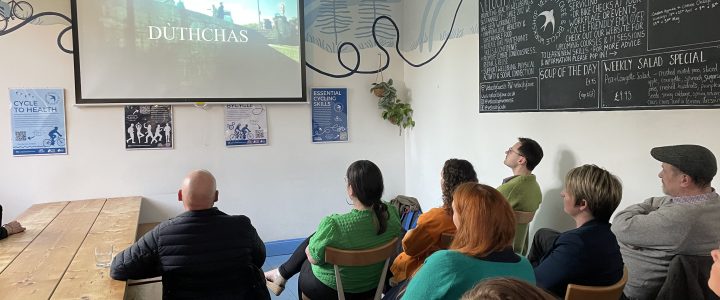
A new film training initiative aims to support museums and heritage organisations across the Highlands and Islands to deliver film training, screenings and cultural film festivals.
POETIC FILM SCHOOL aims to bring accessible and affordable filmmaking to people of all ages and skill levels; from first-time enthusiasts to experienced filmmakers, all who desire mentoring to hone their art form. The initiative has been brought to life by Sutherland born filmmaker Robert Aitken.
Robert is a writer, director and producer who has been making films about the people and places of the far North of Scotland for over a decade and delivering a successful programme of accessible film training for the last four years.
“I work predominately with rural Highland communities and have a deep understanding of people within landscapes, which has helped me develop a grounded placemaking approach to making films, and now with this new film training programme,” Robert says.
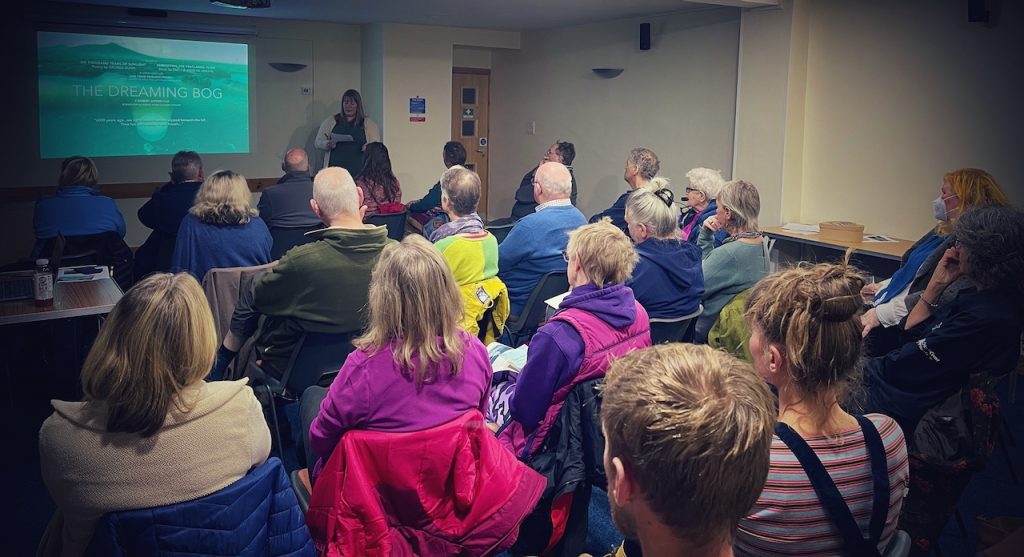
Robert’s latest film, The Dreaming Bog, an ecopoetic story about the bogs, mires ands peatlands of the Highlands, helped him to develop a greater awareness and understanding of the fragile economics, complex local politics and layered social narratives that underpin the anxieties of communities facing economic and potentially long-term environmental change in the far North.
To that end, POETIC FILM SCHOOL is a socially engaged filmmaking process (including smartphone filmmaking skills, scriptwriting, use of audio apps, editing, and final production etc.) and offers invaluable opportunities and support, especially for vulnerable local young people struggling with mental health issues and social situations. It can provide a creative outlet for anxiety and increase confidence and self-esteem.
There has also been a greater uptake by the older generation in digital activities since the Covid Pandemic, which can help combat isolation and loneliness. POETIC FILM SCHOOL aims to bring together In-Between Localities, Creatives (of all disciplines) and Young & Older People – here, there is great potential for intergenerational activities, including memory recording sessions, archival research and script writing.
Robert adds; “I embrace opportunities to reconnect people to their home area in the Highlands through filmmaking and engaging with communities, local filmmakers, writers, artists, researchers, anthropologists and historians etc. I enjoy sharing this rich and creative experience through mentorship and socially minded projects.”
Museums and Heritage organisations across the far North have faced challenging times of late, but this new film initiative offers a unique and timely opportunity to help support communities through a pivotal change in the area’s infrastructure and heritage. The ability to transition and capture this through engaging filmed stories, with a multitude of diverse voices, is at the heart of the training workshops on offer.
POETIC FILM SCHOOL also has a great team of researchers and cultural advisers to call upon, who can assist organisations work with their collections and archives, to help groups develop new scripts, stories and narratives embedded in their unique locality and culture. Over fifty screenings, film training events, and conferences across Scotland and International have already been delivered.
The film training is all about people; their past, memories and dreams for the future. But it’s also about people finding voice and expression through film-making and socially engaged research and creativity; to listen, learn and share about where they live and their place in the world.
“We are all having to adapt to new ways; adapting to the very real societal and environmental changes that local communities are facing whilst tentatively looking toward new ways of harnessing power and energy. As Caithness Makar, George Gunn, once told me, ’I want to tell modern stores about people in an ancient landscape’. That exactly sums up my approach.” Robert concludes.
POETIC FILM SCHOOL can offer now filmmaking training workshops for individual groups or collaborations of organisations working together to reduce costs and deliver one-off or multiple film screening events.
Now is a great time to get involved in film-training, so if you’d like to arrange film workshop and/or film screenings in your area, please contact Robert on: robert@aitken.online
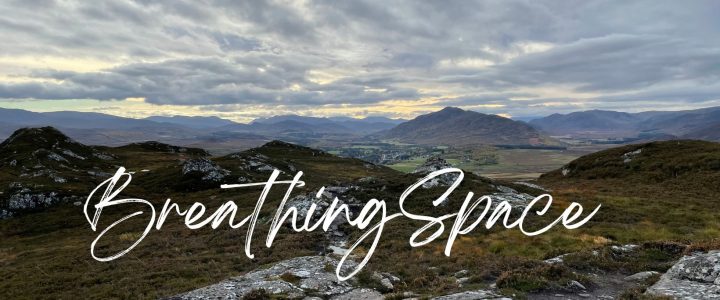
We are delighted to launch the call-out for our second Breathing Space residency.
Breathing Space is a 2-day professional development opportunity for early to mid-career curator/managers. Curator/managers often find themselves focusing on the organisational aspects of their roles, caught up in a never-ending list of deadlines, unanswered emails, fundraising applications and budgetary concerns. The aim of this residency is to give them the opportunity to ‘take time out’ from the everyday to-do list, share their experiences, enrich their practice and explore in-depth issues, concerns, possibilities and opportunities in a safe non-judgmental environment. The weekend will be facilitated by Tamsin Russell and hosted by Nicola and Helen.
We are looking for three Climate Ambassadors to work with us on supporting the museum community in the Highlands to implement environmentally sustainable practices.
Our Highland museums often tell us that environmental sustainability is a priority for them, but that they can find the topic too big and a little overwhelming at times. ‘Please just tell me what I need to do,’ is a statement we often hear. After exploring some ideas as a group, we believe that the best way to meet this challenge head on is to upskill three passionate individuals in environmentally sustainable practices that are specific to our region and context. And to do this we will work closely with Ki Futures – an international coaching and training network, connecting cultural practitioners across the world with real, sustainable action.
Our MHH climate ambassadors will be invited to join the Ki Futures program for a tailored 6-month program to learn about sustainability and how to support member museums in implementing their climate, energy, and waste goals. This innovative partnership is tailored specifically for our climate ambassadors program and has been designed in collaboration with MHH and Ki Futures.
This is a 6 month, paid role, giving each ambassador the time for training, study and work without it impacting on their other commitments. The full brief for the role is below and please do get in touch with any questions you may have.
This project is supported by the Museums and Galleries Scotland Forum’s Fund with thanks to National Lottery Players.
A year ago, when starting to consult Highland teachers on priority areas in their work, ‘pathways to the workplace’ and ‘careers education’ were raised frequently in these conversations. In this blog, Rosie Barrett (digital education specialist) discusses our approach to integrating these priorities into our object based learning model for Museum of the Highlands.
Supporting young learners to access future employment features in many school development plans for the region. The Scottish education system has long been committed to providing a comprehensive and well-rounded education for young people. A crucial element of the Curriculum for Excellence, known as Planning for Choices, focuses on equipping students with the necessary skills and knowledge to make informed decisions about their future career paths. At a basic level, most of us would agree that preparing young people for their future is what teaching is all about.
We worked hard on this as a project team throughout, constantly pushing ourselves to develop activities that helped with the skills and qualities that young people need in the 21st century, including critical thinking, creativity and empathy. However, I was also intrigued about whether we could take this even further.
Selecting a starting point
All the objects found on Museum of the Highlands are divided into one of five chosen themes. From the initial teacher consultation, it was clear one of these themes should focus on employment – we call it ‘World of Work’.
Deciding to create a section on the website dedicated to the world of work meant when staff and volunteers across the fifteen participating museums were selecting objects for the project they included objects that could support this theme and tell of how Highlanders made a living over the centuries and what the working world looks like today.
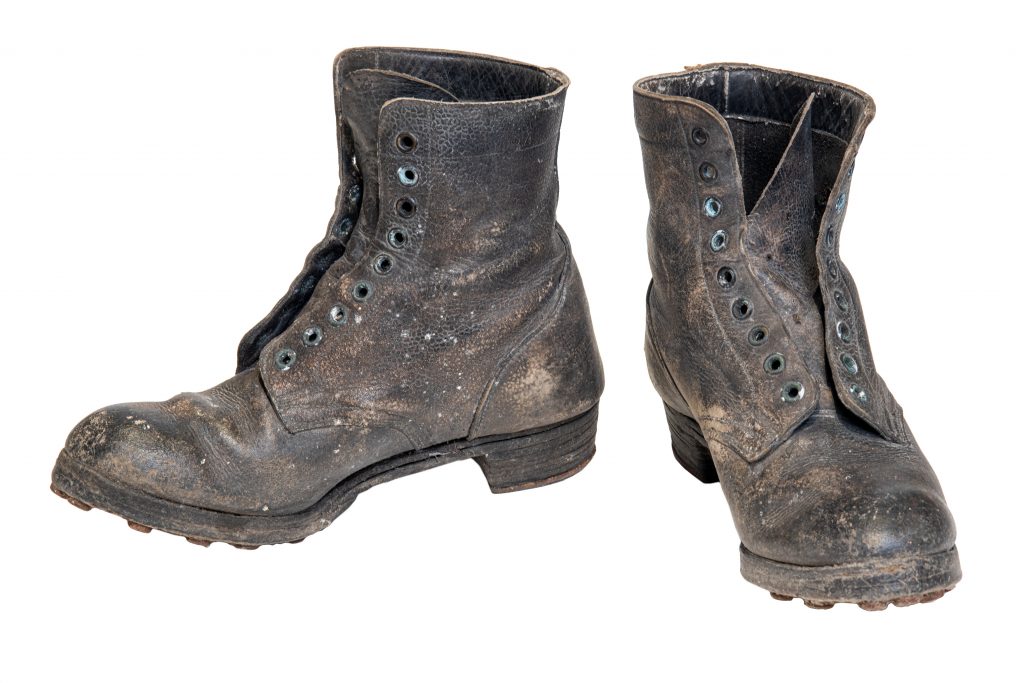
In this theme a focus on the Ballachulish slate quarry is drawn out. A pair of leather quarry-workers boots may look unassuming at first, but the metal inserts on the toes and heel produced an unusual ‘tack’ sound when walking and they were referred to as tackity boots – a term still used today.
Once objects were selected we could be quite playful with them. Staff at Glencoe Folk Museum recorded this unusual ‘tack’ sound for us for the activity ‘What’s that Noise’. Now, teachers can play the recording for their class and guess what is making the strange sound. For a moment, you’re right back, hearing sounds that the people of the past heard. It’s a great way for pupils to learn about local industry and the life of quarry workers. It’s also a route into discussing other issues about the workplace, such as health and safety, what other features working boots have to protect the wearers, or even design features of footwear today.
A series of fun quizzes also allows younger children to be introduced to a range of historic jobs by asking ‘Could You Survive?’ These activities explore topics such as working in a coal mine, as a lighthouse keeper or in the fishing industry.
Raising aspirations through expertise
We were keen to address raising aspirations for Highland learners. We wanted to showcase some amazing career opportunities while supporting schools to fulfil the Curriculum for Excellence. One element stood out for us – “Effective teaching harnesses the experience and expertise of different professions to make specialist contributions.”
A really exciting part of the project was a set of careers videos, called ‘In Their Hands’ – the clue is in the name. We were very privileged to work with experts in their fields, men and women with fascinating careers who were able to offer some unique insights into the historical objects in the museum collections. We literally placed the objects in their hands to see what they made of them.
The resulting videos challenged those of us in the museum sector to see these objects in different ways, but also genuinely support by highlighting careers through our video content. By setting careers within a clear historical context, we were able to look to how they might develop in the future, too.
When we asked a judge to explore items from a historic courtroom, we also discovered why and how the Law evolves. When an anaesthetist explored the transformative role of chloroform in surgery, he was able to provide insights into the workings of the medical profession, and the principles and priorities that underpin careers in that sector. Other professionals included an archaeologist discussing an archaeology technique from the past that went wrong, a geologist talking about famous Highland geologist Hugh Miller based on a carving he made, and an award-winning writer exploring how she was inspired by a Highland glen.
We hope the videos will be inspiring for young learners – and we hope they’ll be well used. We worked with a class of young people from Ullapool High School to find out what they wanted to know about careers. They were keen to find out how hard it is to get published as a writer. They wanted to know how many people a judge had sent to prison and what the worst conditions a geologist had ever worked in. If you’re intrigued, you can find the answers in the ‘In Their Hands’ section of the website.
The stories we tell.
Good career guidance can also help students to overcome barriers and stereotypes that may hinder choices, including those based on gender or socio-economic background. In response to this, we included stories of real historic Highlanders from a range of fascinating backgrounds and careers.
Visitors to the Museum of the Highlands website can explore the inspirational story of Megan Boyd. Known to many through the 2013 film Kiss the Water, Megan was an expert salmon fly-tyer, much in demand including by royalty. She challenged gender stereotypes within her lifetime but also worked very long hours. We were able to explore her story and open up discussions about the working world today – the difference between a job or a vocation, for example, the importance of being ourselves, and healthy attitudes to work-life balance.
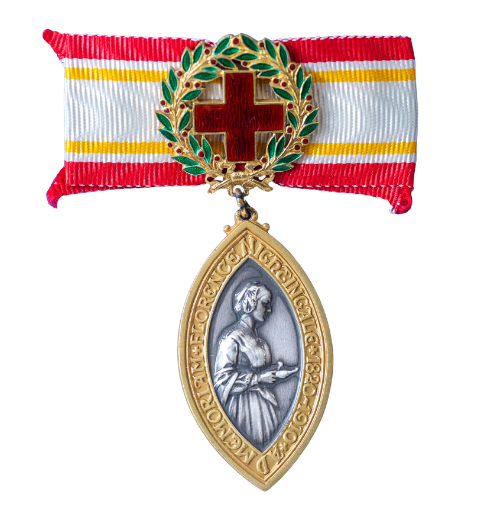
Another inspirational female featured is Red Cross Nurse Janet Adams. We focused on just one aspect of her long and varied career, when she supported in the aftermath of Hurricane Janet during the 1950s. Another story shares the unusual mountaineering career of Hamish MacInnes, inventor of an ice axe known to have saved many lives. This story poignantly explores the impact of old age on this famous Highland character.
A lot of my work as an education consultant is based around how we can move passive learning experiences (like reading a story), into more active ones (engaging with a story at a deeper level). We were able to do that through Museum of the Highland by making the stories interactive, incorporating a range of questions into the text. We tried to make these fun, engaging and thought-provoking. Crucially, in many cases there are no right or wrong answers to the questions, just lots of opportunities for young people to decide how they feel about the topics.
What is crucial about all these reflections on careers is that they give young people the chance to decide how they feel about their own attitudes to work, whilst opening up a world of possibilities of careers in the region through museum objects.
The Museum of the Highlands project was funded by Art Fund and Museums Galleries Scotland and is sponsored by Ilum Studio