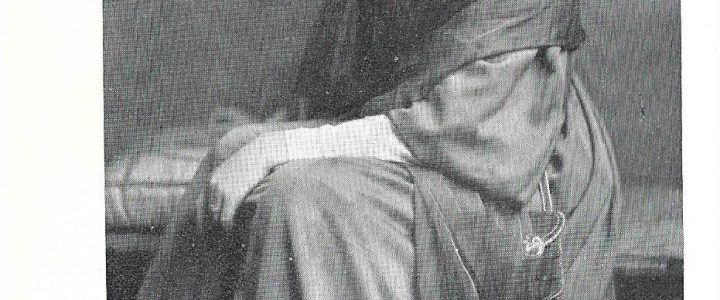
Margaret grew up in Castletown, Caithness, the daughter of the village cobbler. Despite her humble beginnings she went on to influence the education of generations of girls. After early schooling at the local school, Margaret was sent to board with an elderly lady to allow her to attend Wick Academy for further education. She became a pupil teacher in the town and embarked on teacher training in Aberdeen. She stayed in Scotland when her family emigrated to Nova Scotia. It was her interest in the physical and mental development of children which allowed her to change the “Code “ or requirements for sewing on the School Curriculum. The emphasis at the time was on the fineness of stitching on a delicate white material. This Margaret declared to be as meaningless as using black chalk on a blackboard. She became an instructor in the Glasgow school of Art, Charles Rennie MacIntosh was among her associates. She developed the “ Margaret Swanson System of Educational Needlework” revolutionising its teaching in Britain and abroad. Children were encouraged to choose the bright colours of thread they preferred , learning to stitch on unbleached calico with wool and cotton. Older girls were shown how to make their own embroidered garments, allowing imagination and creativity . Margaret continued to travel, research ,lecture and learn until ill-health put an end to her devotion to her craft.
Pauline Moore, BBC producer and reporter and experienced podcaster, will interview Muriel Murray who first learned of Margaret’s story. There will be material relating to Margaret Swanson’s early years and examples of needlework on display for everyone to peruse over the tea and cake break. We will also be joined by the local school and local crafts groups as the audience is invited to make their own ‘sampler’ in Margaret’s memory.
This event has been supported by the Year of Stories 2022 Community Stories Fund. This fund is being delivered in partnership between VisitScotland and Museums Galleries Scotland with support from National Lottery Heritage Fund thanks to National Lottery players.
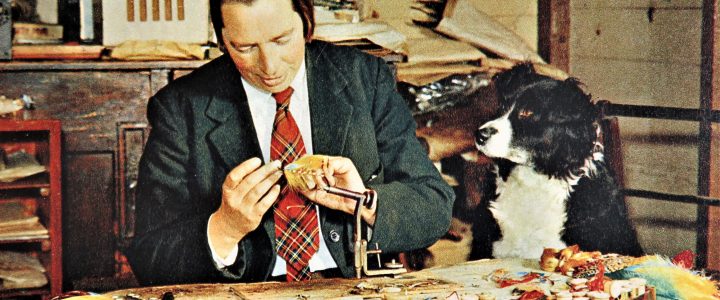
Though she never fished herself, she is regarded as the finest maker of salmon fishing flies in the world. She took to the craft of salmon fly dressing under the supervision of a Sutherland gamekeeper. She won her first award in 1938 at the Empire Exhibition in Glasgow and received the British Empire Medal in 1971. Discussions are taking place about commissioning an art installation in her memory and erecting it at one of the gateways to the village of Brora. The move came after a Norwegian angler and Megan Boyd devotee made a pilgrimage to Brora to pay homage to her, but was shocked to find nothing about her there, although her life story is told at the Brora Heritage Centre.
Caroline Ross (1904-1985)
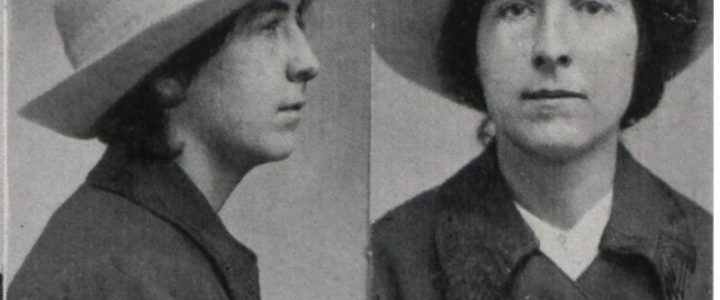
Caroline Ross was a 25-year-old, single schoolteacher who concealed her pregnancy and delivered her ‘illegitimate’ child alone in her room in her lodgings in a rural community in the Highlands of Scotland in 1930. The child was discovered dead the same day.
She was put in custody and charged with Child Murder and appeared in court three months later. The case was widely reported in the papers at the time. Writer and historian Nick Lindsay writes that – ninety years on and the sense of the stress and tension of the terrifying court case in which she spoke not a single word of evidence, is tangible. The medical evidence appeared damning; the cause of the infant’s death was throttling, but the jury delivered a verdict of ‘Not Proven’. An absolute cliff-hanger to the end! It’s an extremely sad story with a tragic outcome but, it illustrates a lot about attitudes and lack of support for young woman who found themselves pregnant at the time. The court case was a media sensation at the time. How can stories like this be remembered and reflect on changing attitudes?
Pauline Moore, BBC producer and reporter and experienced podcaster, will interview Dr Nick Lindsay, author and chair of Clyne Heritage Society. Pauline and Nick will be joined by Mary Warrior for Megan’s story and by Wattie and Angela MacBeath for Caroline’s story. There will be an opportunity to look at objects related to the stories and enjoy a cup of tea.
This event has been supported by the Year of Stories 2022 Community Stories Fund. This fund is being delivered in partnership between VisitScotland and Museums Galleries Scotland with support from National Lottery Heritage Fund thanks to National Lottery players.
How is a notorious story which would have been thought of as shameful and shunned at the time remembered now? Mary Marjory was the only child of a local Gaelic speaking fishing family who had a successful business in town. She was orphaned in her teens and took to London society, travelled across Europe and became a very successful jewel thief – gaining the trust of the Ladies she worked with in high society circles. She was caught and tried a number of times, including on the platform at Strathpeffer Old Railway Station where this event will be held.
Pauline Moore, freelance BBC producer and reporter and experienced podcaster, will be in conversation with Siobhan Beatson, curator at Ullapool Museum and Morven Macdonald, curator Highland Museum of Childhood to uncover Mary’s story. There will be opportunities to explore the platform where she was caught, look at the museum display in her memory, enjoy some tea and cake and to be interviewed for a podcast, giving your thoughts on the story.
This event has been supported by the Year of Stories 2022 Community Stories Fund. This fund is being delivered in partnership between VisitScotland and Museums Galleries Scotland with support from National Lottery Heritage Fund thanks to National Lottery players.
Helen Pickles, curator at the Highland folk Museum, tells us all about the development of their digital dressing up filters and how they are using them to engage new and existing audiences.
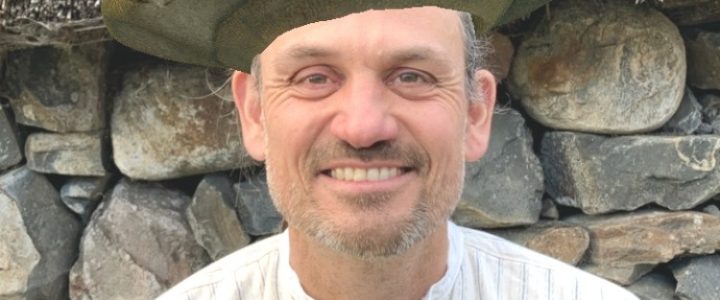
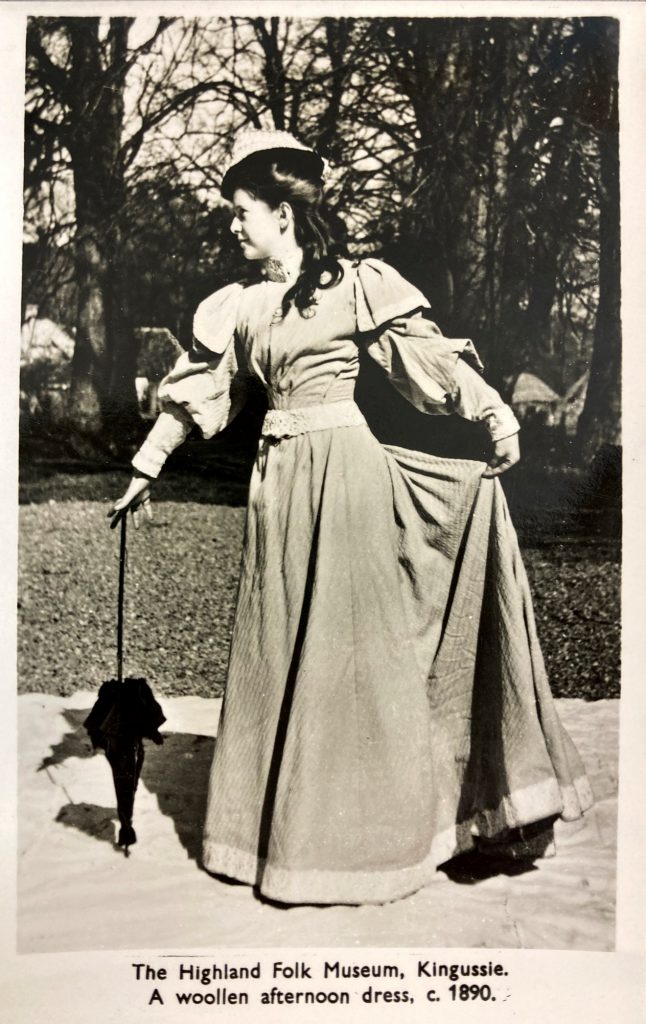
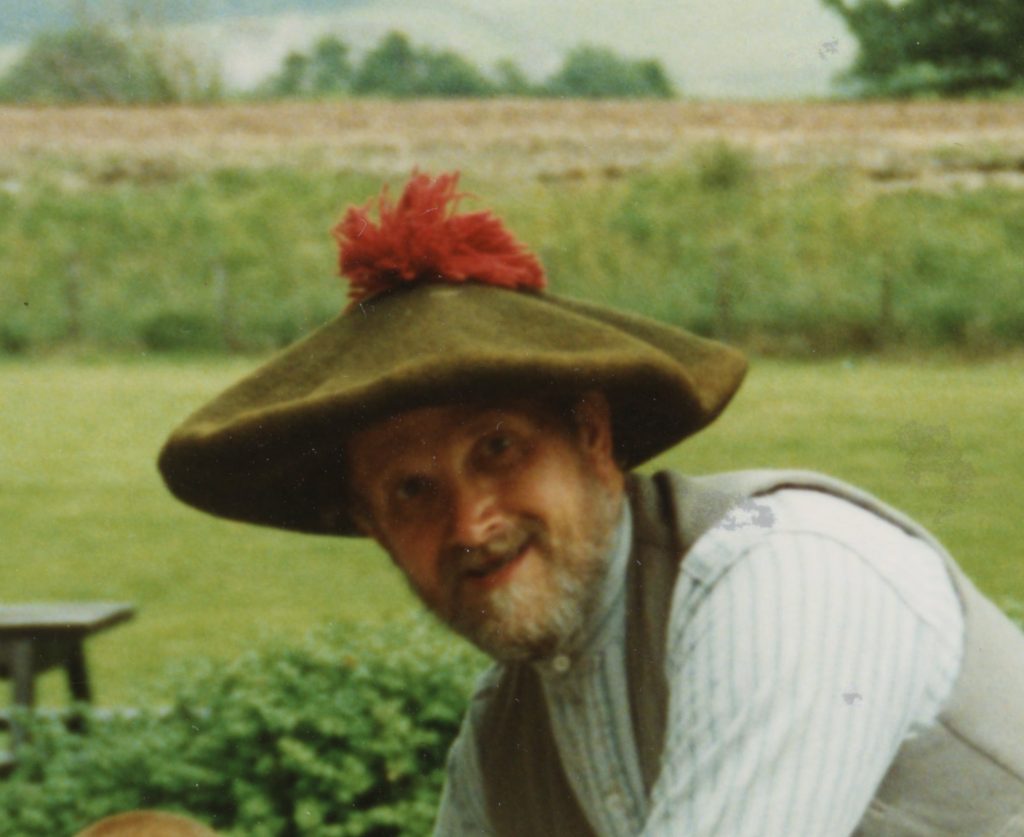
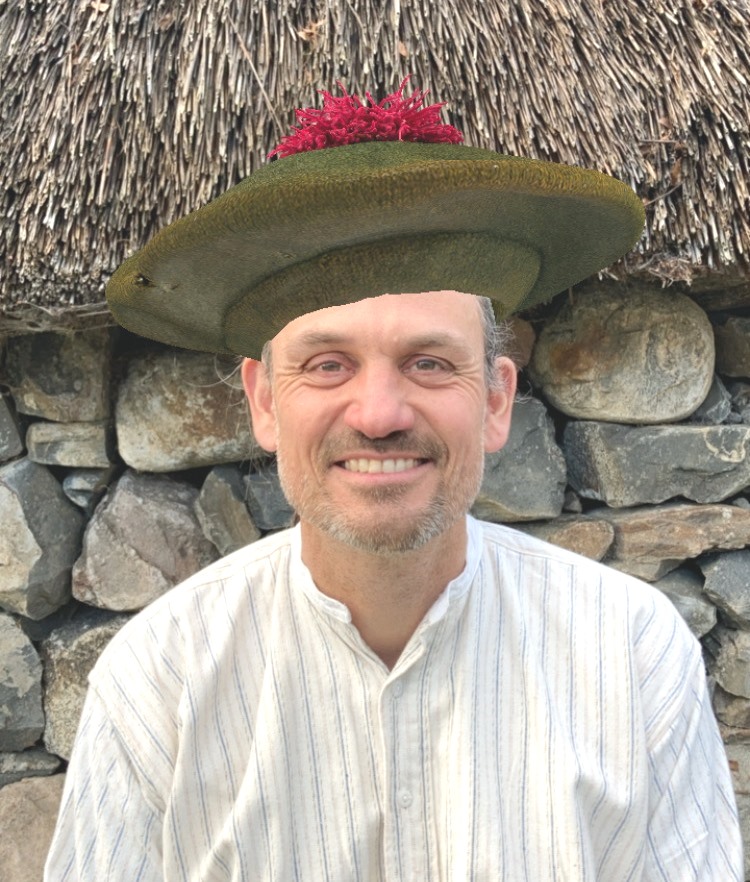
Aside from the threat of moths and light damage, and the problems posed by delicate fabric and never enough storage space, there’s an additional challenge with costume collections…fighting the desire to dress up! Conservators can breathe a sigh of relief though, as the days of wearing one’s collection has long gone. The founder of the Highland Folk Museum, Dr Isabel F. Grant, had some of the 19th century dresses in the collection modelled by local girls (with tiny waists), and the images made into postcards. Former Curator Ross Noble was known to wear a tam o’shanter from the collection for events in the 1980s and 90s, but it’s a practice we’ve now, somewhat begrudgingly, left behind.
Ross Noble wearing the tam o’shanter
We’ve recently been trying out an alternative way to experience the items…Augmented Reality dressing up.
In 2021 we received funding from the Esmeé Fairbairn Collections Fund which allowed us to get creative and develop a social media filter to let visitors try on something from the collection. This was a part of a wider project in which we also created digital tours of some of the historic buildings, to bring our collections to a wider online audience.
After some research and looking at the capabilities and costs of the technology, we decided to stick to the head and shoulders rather than going for a full body experience. “Virtual trying on” has been used for a few years by opticians and glasses frames providers, to allow customers to test out what style suits their face, and it works well. Head movement tracking technology is advanced enough to give a convincing result, with the accessory matching the movement of the head. However, we couldn’t find any museums who had used this tech to engage users with heritage hats or accessories, so we were excited to give it a go and see what we could do.
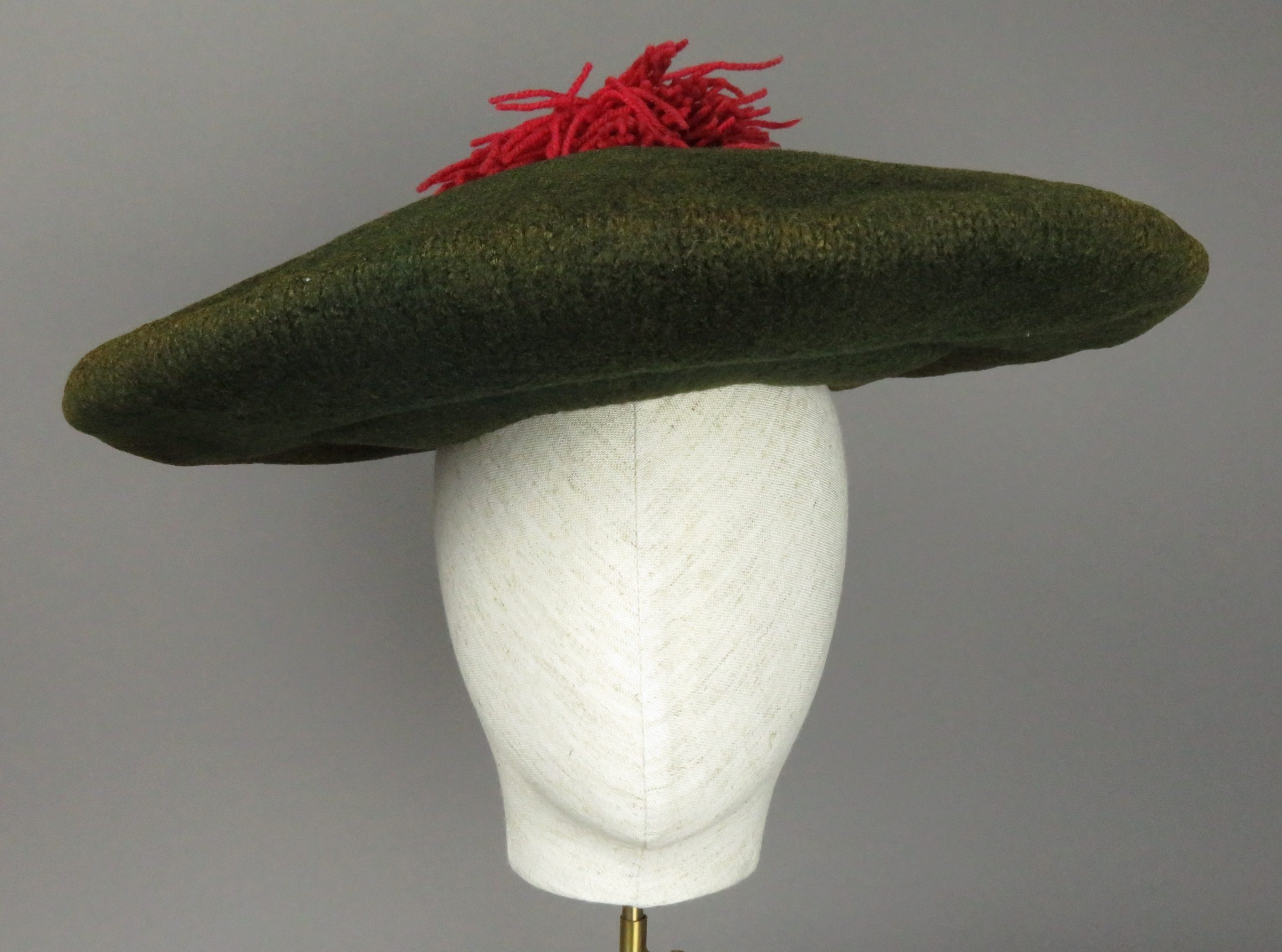
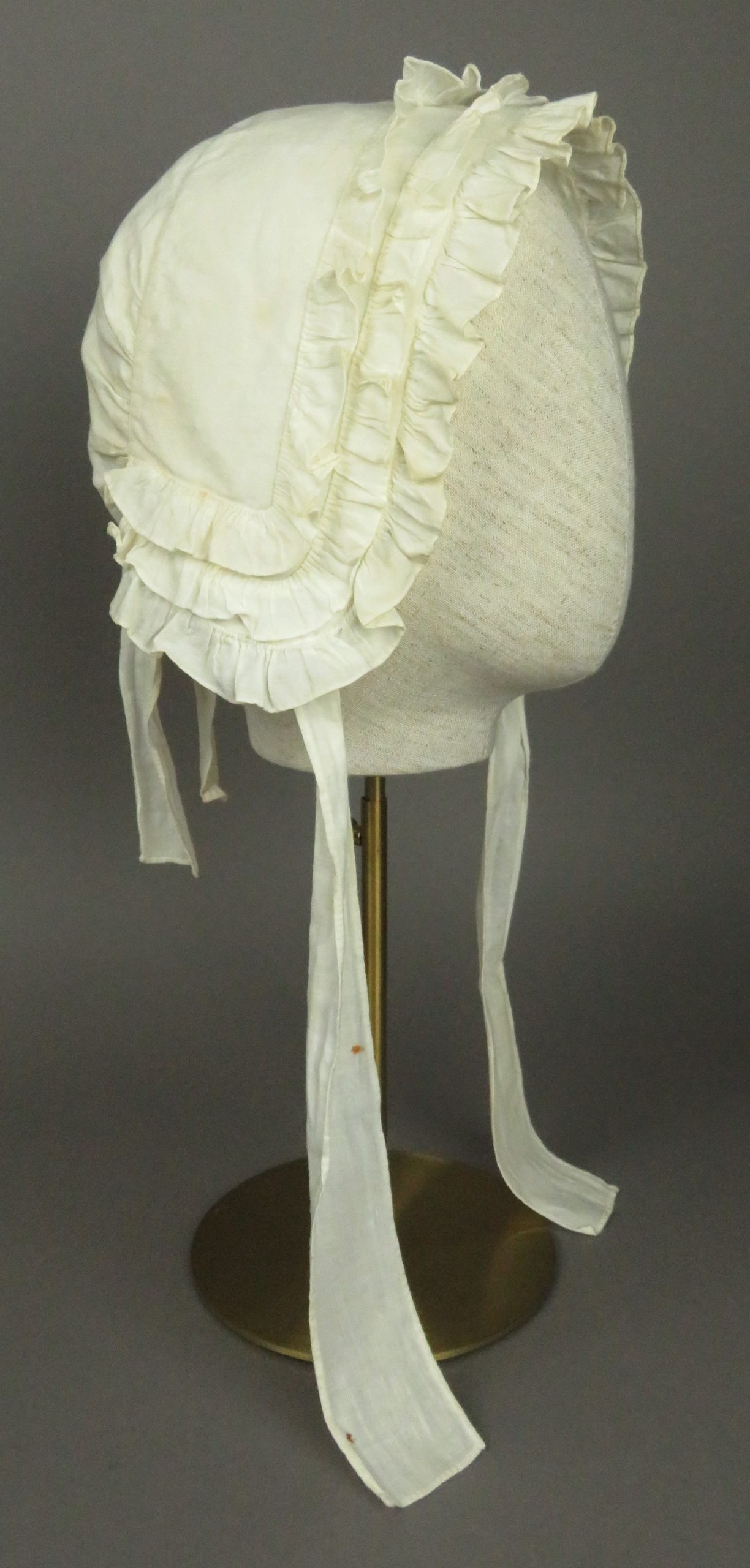
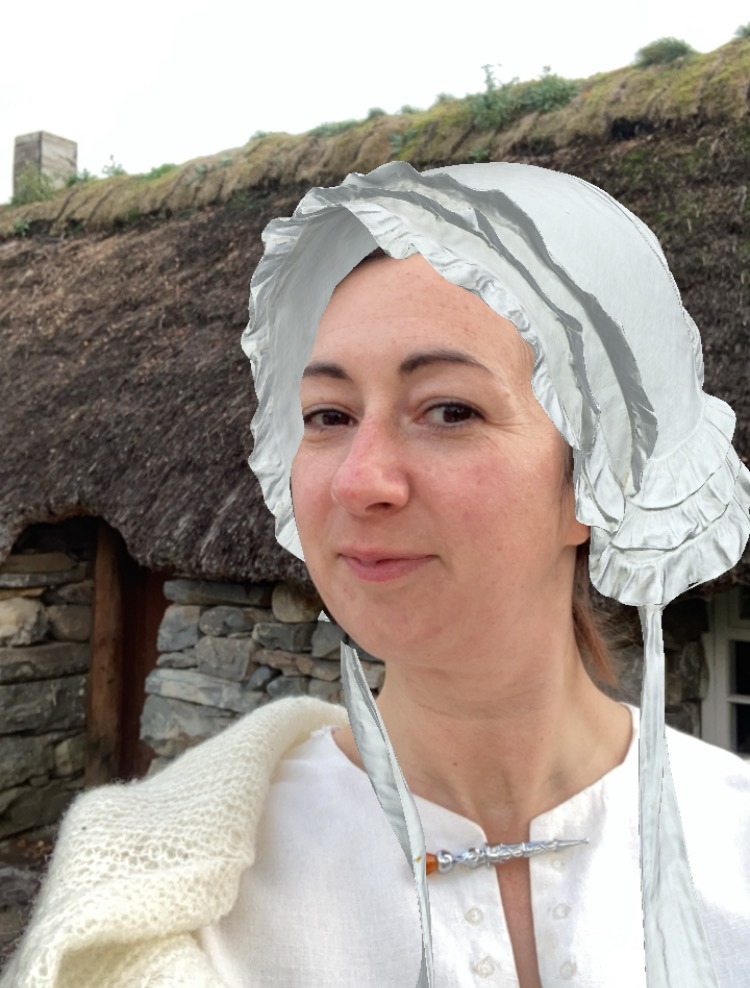
We selected two hats from our collection which are quintessentially Scottish – the green tam o’shanter with red toorie as modelled by Ross Noble, and a 19th century white cotton mutch, with frills and a ribbon fastening. Both were in good condition, stable enough to be handled, packed and transported, they would hold their shape when photographed, and there were no very thin or transparent areas (such as lace) that would cause problems in data capture.
Tam o’shanterCotton mutch
The first stage of the process was to create a 3D model, then second stage was the production of the filter. Both of these are specialist skills that we didn’t have in-house, so we worked with two external companies on this project; AOC Archaeology Group and Dynam design agency.
AOC Archaeology are experts in 3D scanning and photogrammetry. They usually work with archaeological remains, sites or buildings, but were very keen to take on the challenge of recording smaller museum objects, in particular textiles items.
The bonnets were couriered down to the AOC studio and lab in Edinburgh, and photogrammetry (hundreds of photos taken from all angles, then digitally pieced together to form a whole) was used to produce the 3D models. There was some discussion about the angle of the tam o’shanter upon the head. According to James Logan, writing in his 1876 book “The Scottish Gael”, the inhabitants of Badenoch, Strathspey, Strathdon etc wore their bonnets cocked, so that provided our answer.
Once the photogrammetry had been completed and the 3D models finished, Dynam took over to create the digital dress up effect. Rather than creating a whole new app to achieve the result, they recommended an Effects filter which works in both Instagram and Facebook – two platforms where we already have an established audience.
After some back and forth with getting the size and colour just right for each hat, we ended up with two fantastic results. The final part of the creative process was taking the promotional shots. My colleague Hannes Schnell and I modelled the hats with the 19th century thatched Highland Cottage in the background, a building that fits with the era of the bonnets. Our seasonal Costumed Interpreters wear mutches, and now visitors can too!
The filters were launched in late November 2021, and promoted in the local press and across our social media. They received a very positive response, with hundreds of views within the first few days. We encouraged our online audience to share images of them trying on the bonnets, and tag HFM in their posts. It seems like people are a little shy at doing this, as although the filters are being opened and viewed, users are about three times as likely to save the image than they are to publicly share the images on their posts or stories.
Usage of the filters has been a wee bit quieter over the start of this year, but has picked up again since the museum opened to the public in April. Promotional posters around the site include QR codes to take visitors directly to the effects, which really helps in finding them. If you’re not used to using social media Effect filters, it can be tricky to find them until they’re pointed out, so we’ve found that providing direct links works really well in getting people there.
We’ve received positive feedback from visitors on site too, with staff reporting lots of laughter and giggles with people trying on the hats. Trying on the tam o’shanter or mutch with the backdrop of the historic Highland buildings (or in the comfort of your own home) is a bit of fun – go on, you know you want to!
Use your smartphone or device to try on the bonnets with the Facebook or Instagram apps:
Maths Week Scotland is a dedicated week of events and activity, with special events throughout the year. Events take place all across Scotland for families, adults and schools hosted by science centres, museums, organisations, schools and more! This year, Maths Week Scotland will take place 26 September – 2 October 2022. (featured image copyright Abermedia)
Maths Week Scotland 2022 will have the theme ‘The Beauty of Maths’’ with a focus on creativity and beauty in maths, as well as the maths in such as art and music.
Maths is all around us in our everyday lives and that is reflected in the broad programme of activity. Maths Week Scotland shines a light on maths in unexpected places and gives people the opportunity to engage with it in new fun ways.
Across Maths Week Scotland, we want people of all ages and backgrounds to: Be curious, enthusiastic, confident and engaged in numeracy and mathematics Understand the relevance of maths learning and skills to their lives, now and in the future Have access to a diverse range of events and activities promoting and demonstrating the joy and value of maths
We had seven museums take part in Maths Week Scotland from the Highlands to the Borders. You can see what museums got up to for Maths Week Scotland 2021 here. If you are interested in taking part in Maths Week Scotland please contact mathsweekscot@nms.ac.uk to find out what support is available. We can offer support from maths education and museum specialists to help you get started or work through your ideas.
The Large Grant Fund is offering grants of between £2,000 – £7,000 to support organisations, partnerships and charities to develop exciting new strands of Maths Week Scotland 2022.
If your project is smaller than this amount there will also be a Small Grants Fund for applications of up to £2,000. For more information on the Small Grants Fund find out more here.
The final deadline for submission is 17:00 on Monday 16 May 2022.
Applications received will be reviewed and advised of outcome by Monday 30 May 2022.
We are seeking a Digital Learning and Interpretation Specialist to work with us on creating content for a Digital Learning Hub for schools and families. This opportunity is supported by the Art Fund and Museums and Galleries Scotland.
Over the next year we are working with museums across the Highlands to create a dynamic digital learning hub enabling children, young people and teachers to discover and engage with museum collections from across the Highlands in new and exciting ways. The project brings together 17 museums from across the Highlands to collaborate in bringing objects from their collections together to create a digital portal into the rich history and culture of the Highlands. Users will be able to move through historical time, place or subject matter to explore objects in different museum collections using immersive imagery, video and audio and bringing them together to create their own ‘journeys’. The learning hub will allow users to access museum collections and learning resources related to objects and topic for use at home or in the classroom, with the functionality to contact museums directly to set up virtual or in person learning visits.
The Digital Learning and Interpretation Specialist will be a creative leader in this project, focused on providing digital learning and interpretation experiences for all ages. This position is responsible for supporting participating museums in creating online and remote digital learning resources for a variety of audiences, most specifically targeting, teachers, families and young people currently in primary and secondary education. It may suit one person or a team and are happy to discuss different approaches with you before applying.
For full details on the position and on how to apply, please download the job pack below.
Design work is rapidly advancing on Glencoe Folk Museum’s £1.3m lottery-funded redevelopment, scheduled to open in 2023. Peter Drummond architects and Mather & Co. exhibition designers are working with staff and the local community to create a vibrant attraction, fit for the 21st century whilst retaining the traditional look and much-loved charm of the original.
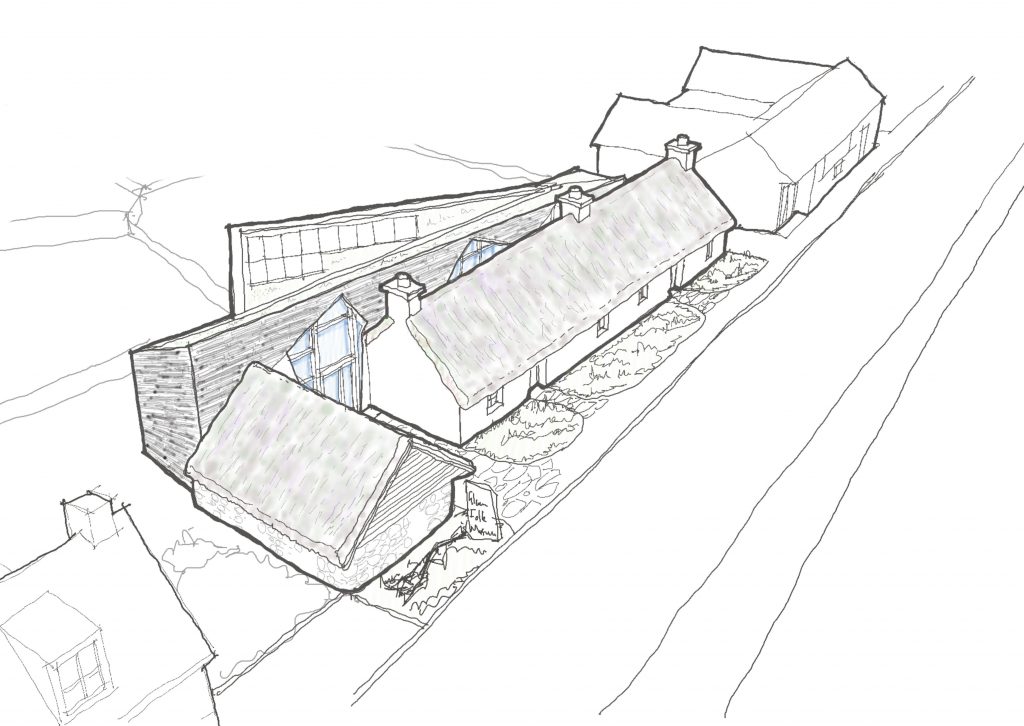
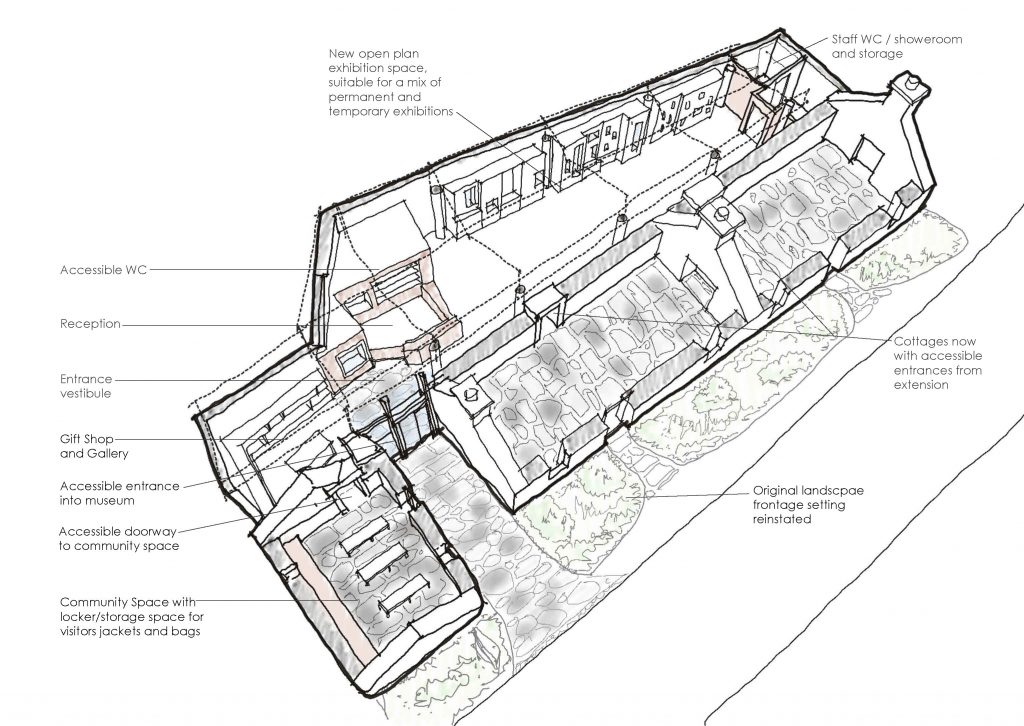
Founded in the 1960s by members of the community, the Museum holds over 6,000 artefacts and chronicles daily life in the Glencoe area between the 17th and 21st centuries, telling stories relating to themes such as industry, conflict, childhood and sport, as well as Jacobite uprisings, Clan history and of course the Massacre of Glencoe. The redevelopment plans include the erection of a new building at the back of the Museum’s historic listed cottages, creating a new reception area, gift shop and exhibition space. Improving visitor access is a key priority, as is improving the display conditions of the more vulnerable objects in the collection.
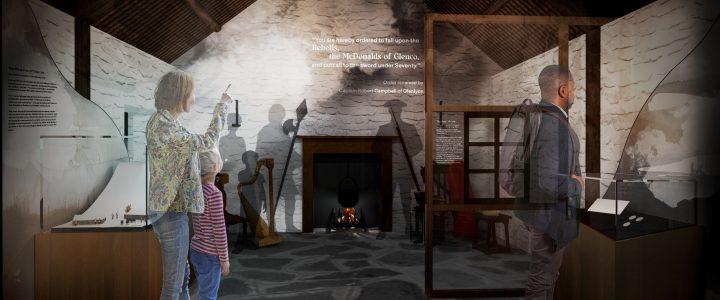
A highlight of the new displays will be an immersive, state-of-the-art projection and audio feature placing visitors in a MacDonald cottage on the night of the infamous 1692 Massacre of Glencoe. This emotive exhibition will bring to life the personal stories of the Massacre and give a clear understanding of the religious, political and cultural environment that allowed such an atrocity to take place.
Project Director, David Rounce, said; ‘There’s a lot of work ahead, including fundraising and shortly seeking planning permission, but we’re well on-track to make a museum that will be a real hub for local heritage – bringing Glencoe’s unique history to life for the community and our visitors from around the globe’.
The redevelopment will also restore the Museum’s listed 18th century cottages, the only surviving genuine heather-thatched structures in the area. Funding from the Pilgrim Trust has been secured to renew the thatch and help the Museum ensure its long-term preservation. It is planned to complement this traditional natural roof with a new “ living” roof on the extension.
Catriona Davidson, Curator, added; ‘We’ve been talking about this project since I started working here over 5 years ago, so it’s really exciting to finally be able to share our plans as everything comes together! Behind the scenes we’re busy researching, choosing artefacts and gathering stories. We’ve also been running community consultation sessions – we really want our museum to reflect the community that created it so it’s important to us that we are sharing as many local voices as possible”
Highlights of the Museum’s collection include a “coffin boat” once used to transport bodies to the Clan burial island of Eilean Munde, a beautiful 1740s silk dress, woven at Spitalfields and passed down the generations of a local family, a replica of the mysterious bronze-age Ballachulish Goddess and a large genealogical chart depicting the branches of Clan Donald.
The Museum will open for the 2022 season on Saturday 2nd April.
Is it the landscape? The community? A favourite memory? How would you interpret it?
The Spirit of the Highlands and Islands project is being delivered by High Life Highland, on behalf of The Highland Council, and aims to create and promote compelling and sustainable visitor experiences that celebrate the Spirit of the Highlands and Islands, past, present and future.
Through the Spirit of the Highlands and Islands project, we will create assets including an interactive map and story archive to inspire greater exploration of the region. These will also establish authentic connections to local communities through their stories, engaging people with our rich natural and cultural heritage.
We asked people to contribute their story responding to the prompt, ‘What story sums up the Spirit of the Highlands for you?’ In doing this, the aim is to create a legacy of engaged communities and co-curated content which will showcase the natural and cultural heritage of the region. This is an opportunity for the people of the Highlands and Islands – those who live, work and travel here – to represent their area. Community stories will also inspire and inform the new visitor attraction currently being developed for the transformed Inverness Castle site.
The Spirit of the Highlands and Islands project will be delivered in partnership with VisitScotland. It is supported by a grant from the Natural and Cultural Heritage Fund (NCHF) led by NatureScot and part-funded by the European Regional Development Fund (ERDF). Reflecting the Spirit of the Highlands theme, it will encourage people to visit all parts of the Highlands in a sustainable way.
Sophie Gartshore, Digital Project Officer for Spirit of the Highlands and Islands, said: “This is a great opportunity for people who love the Highlands to make their mark on the content for Spirit of the Highlands and Islands online and within the transformed Inverness Castle building in future! We are really looking forward to working with other projects and heritage sites to promote the natural and cultural heritage of the Highlands and Islands in unique ways.”
Stories submitted to the Spirit of the Highlands and Islands project will be used to inspire people to visit areas across the region and develop authentic connections with local communities. They are inspiring the creation of a Tapestry of the Highlands and Islands and Spirit:360, an artist commissioning programme supported by Creative Scotland, giving local artists an opportunity to showcase their work capturing the ‘spirit’ of the region.
We would love you to get involved! Do you have a story you want to share about what the Spirit of the Highlands and Islands means to you? Tell us at https://www.spiritofthehighlands.com/get-involved/.
There are many opportunities for museums to be involved with the Spirit of the Highlands and Islands project! We are looking for local people to be involved in the stitching of the Tapestry of the Highlands and Islands, as well as events and craft workshops surrounding this to showcase community stories and collections. We are excited to involve local museums and organisations at these events to highlight important aspects of regional culture and heritage.
We also want to support museum events and projects, especially during Scotland’s Year of Stories. If you would like to be featured on our story map or promote your event/project through our social channels please email info@spiritofthehighlands.com.
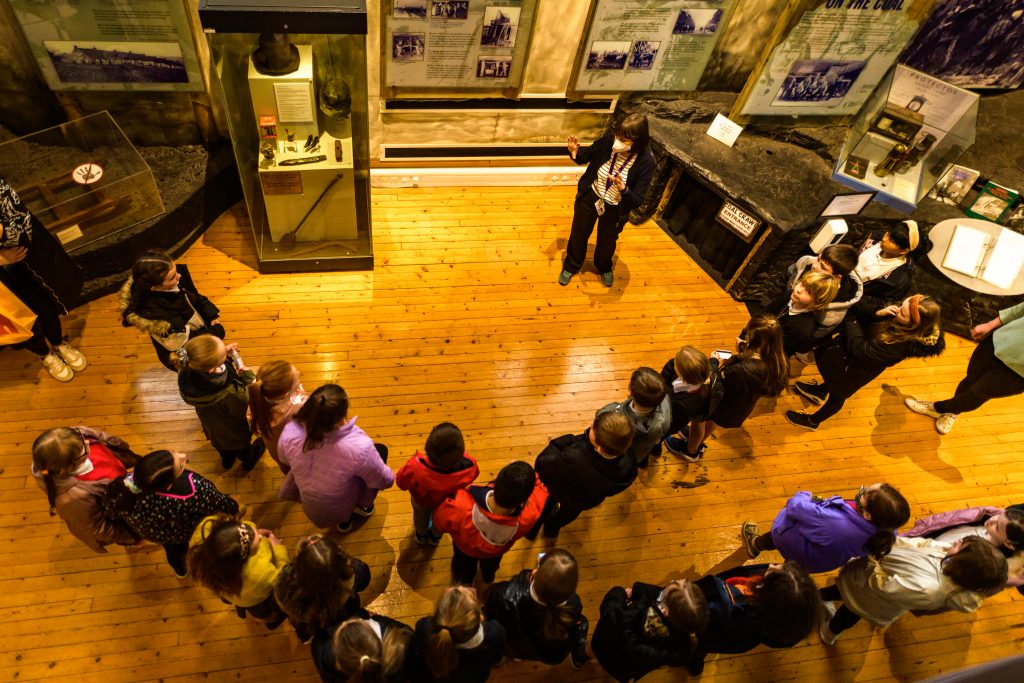
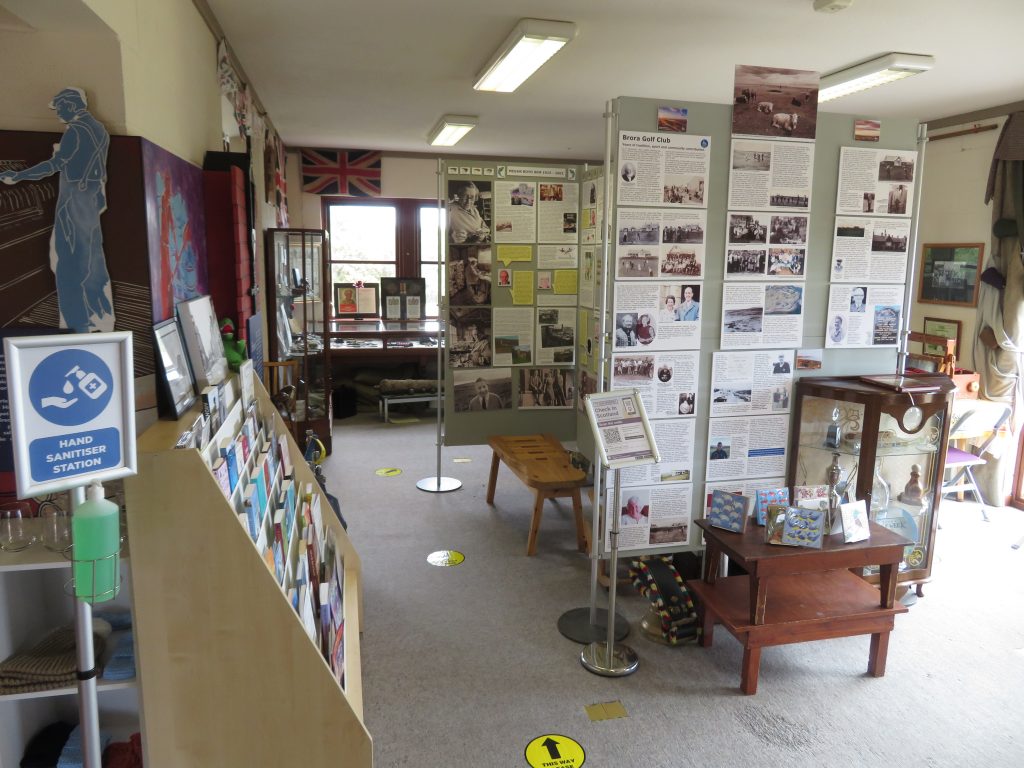
Brora Heritage Centre, in Brora on the East coast of Sutherland, hosts a small community museum packed with displays and objects relating to its fascinating and unique Highland History.
Home to Britain’s most northerly occurrence of coal, it was worked intermittently from 1529 to 1777 to fuel a salt-making industry on the shore. From 1810 a 240’ deep shaft was sunk to exploit the coal and, for this phase in the industrial history of the village, the coal fuelled a further salt-works, a whisky distillery, a brickworks and, later, a woollen tweed mill.
Sadly, the distillery is the only industry which has survived, but the stories live on in the museum, alongside many other incredible local stories from a village which has always punched above its weight.
The centre is operated by Clyne Heritage Society on behalf of Highlife Highland and is open daily, 10.30-4.30, from Good Friday to the end of October. The Society is pursuing plans to open its own heritage centre and museum in the redeveloped, currently semi-derelict, Old Clyne School on the main A9 on the north side of the village.
The Highlanders’ Museum, Fort George has recently launched a brand-new project and they are looking for participants! Freya Samuels, Community and Digital Engagement Graduate, talks to us about their new Community Curators programme.
The concept of Community Curators encourages members of the local community to contribute their opinions and ideas to their local museum – we call this, ‘have your say in our display’.
Over the last few years, it has become increasingly important for museums to take another look at how they talk about colonial histories. We are keen to make sure that our museum interpretation not only represents the views of the modernising museums sector, but also the views of our community. By bringing together a group of Community Curators who are keen to have their voice heard, we will run projects throughout the year looking at object interpretation, contextual narratives, and temporary exhibitions.
This project is taking a wide approach to the term ‘community’. In one sense, community is the people right on our doorstep, around Ardersier, Nairn, and Inverness, but we are all part of a global community – this is why our sessions will be hybrid, allowing participants to attend in-person and online.
Our first project, starting on 2nd March 2022, is called ‘Re-thinking the Indian Rebellion’. The Rebellion is a key event in our regimental history, as all of the historic regiments represented at the museum played a part in the conflict. The project will involve writing alternative object labels and narratives to go alongside the existing interpretation, offering an alternative perspective of the war. We have an exciting line up of speakers, including Dr Jim MacPherson of the University of the Highlands & Islands, Dr Nicole Hartwell of Cambridge University, and a label writing masterclass led by PhD student Chris Berriman.
Sessions for ‘Re-thinking the Indian Rebellion’ will run every Wednesday evening from 2nd March at 18:30, for six weeks. Everyone is welcome to sign up to become a Community Curator, although places are limited – once we have reached capacity, participants will be placed onto a waiting list. Taking part is free, and we particularly encourage participants who are passionate about how museums address colonial histories. To find out more about the project and sign up, just head to our website: https://www.thehighlandersmuseum.com/?page_id=30512 If you would like to get involved in a Community Curators project as a museum, history, or heritage professional, get in touch with Freya at scotgrad@thehighlandersmuseum.com